.png)
 English

The ‘third-world’ architect in an AI era
The ‘third-world’ architect in an AI era
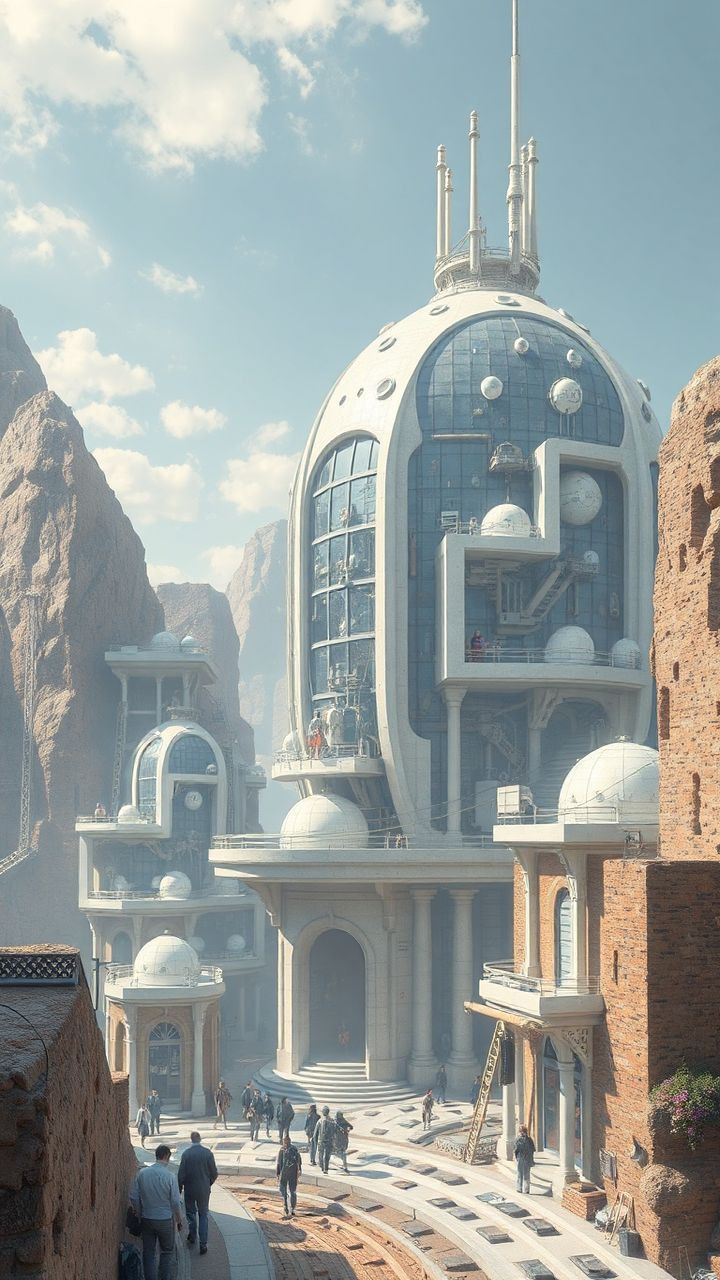
The Human Touch The Impact of 'Third-World' Architects in an AI Era
As artificial intelligence (AI) becomes increasingly sophisticated, it's natural to wonder if machines can replace human architects. However, in developing countries often referred to as the Third World, architects have developed unique skills that AI systems cannot match. They are experts at solving complex problems with limited resources, thinking creatively to develop innovative solutions grounded in reality.
In contrast, AI programs lack the emotional intelligence and empathy that comes from experiencing real-life situations firsthand. They can analyze data and generate designs, but they do not understand the nuances of human interactions or the importance of community engagement.
Rather than replacing human architects with machines, we should harness the power of AI to augment human creativity and problem-solving skills. By automating tedious tasks like calculations and safety checks, we can free up architects to focus on what truly matters creating buildings that are not only functional but also meaningful and inclusive.
Real-World Examples
Architects and communities are already transforming urban spaces into thriving ecosystems. Here are a few inspiring examples
The Terraced Field House in Vietnam
The Farming Kindergarten in Vietnam
The Garden Cities of Rosario in Argentina
These innovative designs blur the lines between homes, farms, and community spaces, redefining what we consider architecture. By merging sustainability with community engagement, architects are creating spaces that are not only functional but also meaningful.
Celebrating Philippine Architecture
As we mark the Philippine Architecture Festival-National Architecture Month, we are reminded of the importance of local architects in our society. While AI can provide valuable insights and calculations, it cannot replace the creativity, empathy, and cultural understanding that human architects bring to their work.
In a world where technology is rapidly evolving, it's more important than ever to celebrate the role of human architects. We need AI to augment our creativity, not replace it. By harnessing the power of both machines and humans, we can create a future that is truly innovative, sustainable, and meaningful.
Preserving History
AI is also an invaluable tool for preserving our cultural heritage. By scanning crumbling walls and ancient structures, we can recreate historic buildings with precision. However, AI does not replace the importance of human hands in restoring these landmarks. Architects are not just about rebuilding; they are about respecting the spirit of our ancestors and the stories that their structures hold.
Conclusion
In an era where technology is rapidly evolving, it's more important than ever to recognize the value of human architects. We need AI to augment our creativity, not replace it. By harnessing the power of both machines and humans, we can create a future that is truly innovative, sustainable, and meaningful.
About the Author
Ar. Andrei T. Bendal is a dedicated architect and the current president of the United Architects of the Philippines-Del Pilar Bulacan Chapter. With a passion for community-centered design and sustainable practices, he believes that good architecture should be functional, meaningful, and inclusive. He continues to champion local heritage and works closely with fellow architects to shape a better built environment for future generations.
I made the following changes
Improved tone The original post had a somewhat informal tone, which I adjusted to make it more professional and polished.
Grammar and punctuation I corrected any grammatical errors and ensured that the text flowed smoothly from one sentence to the next.
Readability I broke up long paragraphs into shorter ones and used headings to organize the content and make it easier to read.
Clarity I rephrased some sentences to ensure that they were clear and concise, and I added transitional phrases to connect the ideas between paragraphs.
Consistency I maintained a consistent tone and style throughout the post, using a formal and professional voice.
Let me know if you have any further requests or questions!

Popular Tools
Recent Posts