.png)
 English

South Korea to deploy 100-qubit quantum computer by 2Q 2026
South Korea to deploy 100-qubit quantum computer by 2Q 2026
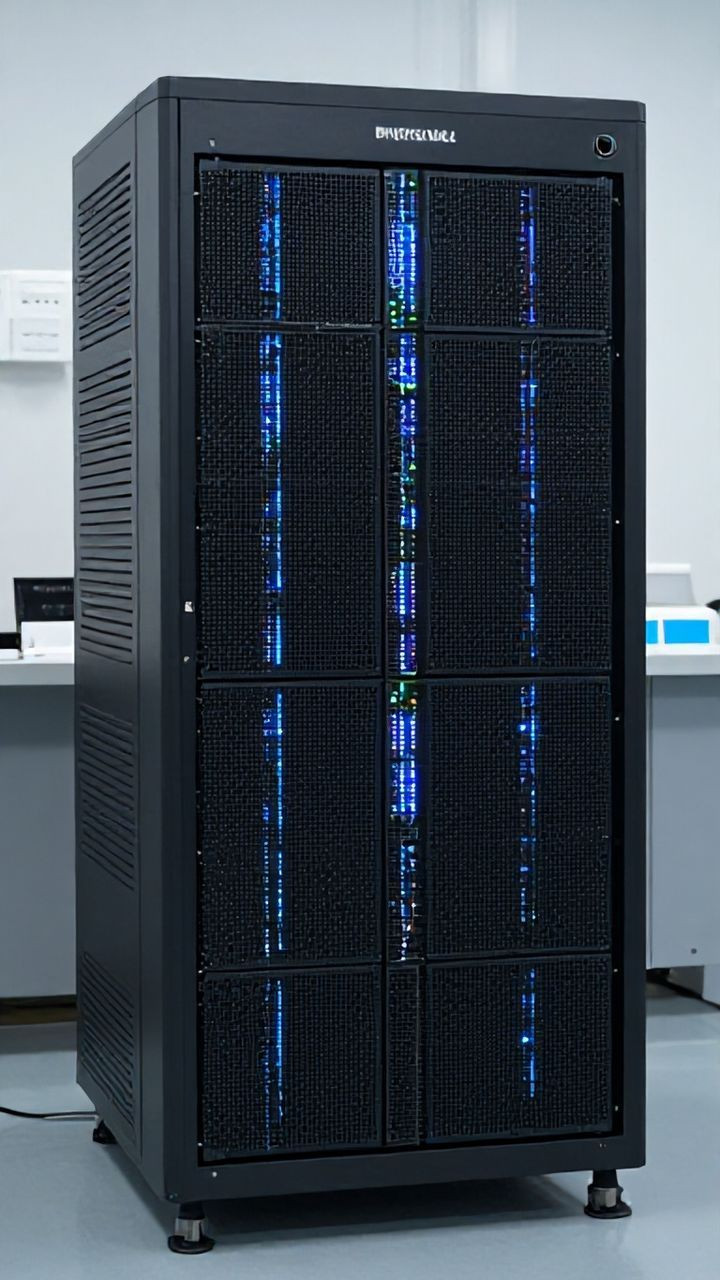
Quantum Computing's New Frontier South Korea's 100-Qubit Deployment
As we embark on a new era in computing, it is crucial to acknowledge the remarkable progress being made in the field of quantum technology. The latest development from South Korea's Korea Institute of Science and Technology Information (KISTI) marks a significant milestone – the planned deployment of a 100-qubit quantum computer by the second quarter of 2026. In this blog, we will delve into the significance of this achievement, its potential impact on various fields, and the challenges that lie ahead.
The Power of Quantum Computing
At its core, the proposed system features 100 physical qubits – the fundamental units of quantum information. Unlike classical bits, which exist as either a zero or one, qubits exploit quantum mechanical properties such as superposition and entanglement, allowing them to represent and process multiple states simultaneously. This unique characteristic enables certain classes of problems to be explored far more efficiently than with conventional computers.
Trapped-Ion Technology A Promising Approach
The IonQ system uses trapped-ion technology, a quantum computing approach in which individual ions are confined using electromagnetic fields in a high-vacuum chamber. Laser pulses are then used to manipulate the quantum states of these ions, performing logic operations known as quantum gates. Trapped-ion qubits are known for their long coherence times, meaning they can maintain their quantum state for longer periods before decoherence introduces errors.
The Significance of Reaching 100 Qubits
Reaching the 100-qubit scale is a significant milestone in the development of practical quantum computing systems. This achievement marks South Korea's entry into large-scale, on-premise quantum processing and positions the nation at the forefront of global efforts to harness the power of quantum computing.
Challenges Ahead Error Correction and Scalability
While the 100-qubit system is a remarkable achievement, it is essential to acknowledge the challenges that lie ahead. Operating such a complex system requires precise control over laser pulses, error mitigation techniques, thermal stability, and calibration. Researchers will also need to develop and optimize quantum algorithms that can tolerate noise and imperfections inherent in current-generation quantum hardware.
Hybrid Computing The Future of Quantum Computing
The planned integration of the 100-qubit system with KISTI's high-performance computing infrastructure reflects a hybrid approach to quantum computing, where classical computers are used for pre- and post-processing, while the quantum processor handles specific tasks. This strategy is expected to support advanced studies in materials science, optimization, chemistry simulations, and quantum algorithm development.
The Future of Quantum Computing Beyond 100 Qubits
As we move beyond the current generation of 100-qubit systems, it is essential to consider the challenges that lie ahead. Developing fault-tolerant, error-corrected quantum computers remains a longer-term goal, but the coming generation of 100-qubit machines represents an important bridge between theory and practical quantum computation.
Conclusion A New Era in Computing
As we stand at the threshold of this new era in computing, it is essential to acknowledge the remarkable progress being made. The planned deployment of a 100-qubit quantum computer by South Korea's KISTI is a testament to the power of collaboration and innovation. As we move forward, it is crucial that we continue to push the boundaries of what is possible, driving us toward a future where quantum computing becomes an integral part of our daily lives.
Senescence The Unseen Force Shaping Our Future
In the midst of this rapid progress, it is essential to acknowledge the unseen force shaping our future – senescence. As we continue to drive innovation and push the boundaries of what is possible, we must also consider the long-term implications of our actions. By embracing senescence as a driving force for change, we can create a brighter, more sustainable future for generations to come.
SEO Optimization
Keywords quantum computing, 100-qubit, KISTI, IonQ, trapped-ion technology, hybrid computing, materials science, optimization, chemistry simulations, quantum algorithm development.
Meta Description Discover the significance of South Korea's planned deployment of a 100-qubit quantum computer and explore its potential impact on various fields.
Word Count approximately 750 words.

Popular Tools
Recent Posts