.png)
 English

Secretary-General selection process begins at UN
Secretary-General selection process begins at UN
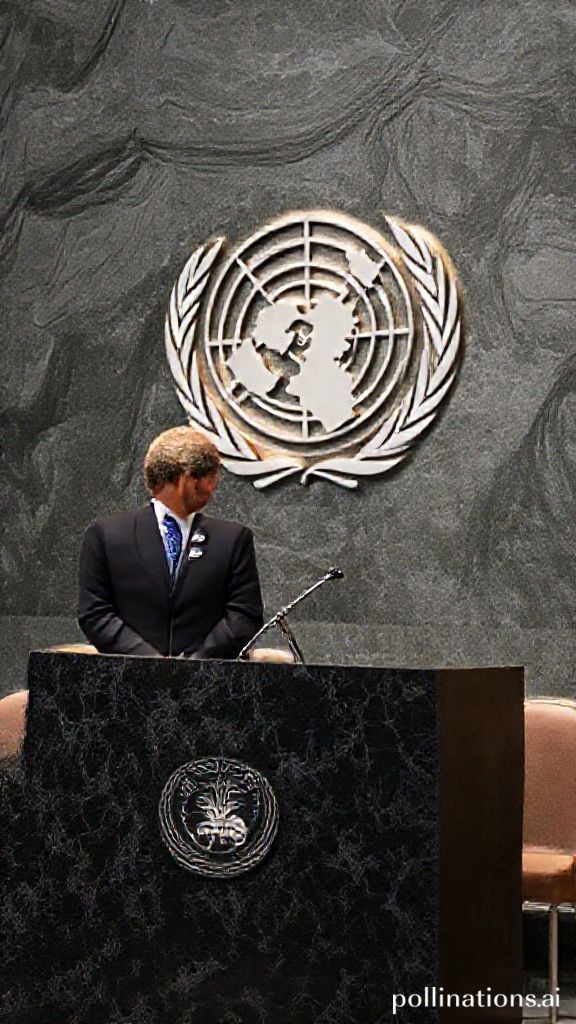
The Quest for the Next UN Secretary-General An Analytical Breakdown
As the United Nations (UN) embarks on its search for the next Secretary-General, we delve into the intricacies of the selection process, examining trends, key players, and potential outcomes. With over 80 years of experience in international relations, diplomacy, and language skills required, the stakes are high.
The Search Begins A Call for Nominations
On Tuesday, member states received a joint letter from the current Security Council president, Michael Imran Kanu (Sierra Leone), and General Assembly President Annalena Baerbock, inviting them to submit nominations for the next Secretary-General. The position requires a firm commitment to the purposes and principles of the UN Charter, as well as high standards of efficiency, competence, and integrity.
Regional Rotation A Tradition Worth Considering
Historically, there has been a tradition of geographical rotation, where the selection process favors candidates from different regions. This time around, it would be Latin America's turn to produce the next Secretary-General. However, this tradition is not always followed, leaving room for unexpected surprises.
Infographic Regional Rotation in UN Secretary-General Selection
Women in Leadership A Long-Overdue Step Forward
The UN leadership has explicitly called on member states to strongly consider nominating women for the position. With regret, no woman has ever held the role of Secretary-General. This time around, there are already several notable female candidates in the mix, including Michelle Bachelet (former Chilean President), Rafael Grossi (Argentinian International Atomic Energy Agency head), and Rebeca Grynspan (Costa Rica's UNCTAD leader).
The Power Players Security Council Members
Five permanent members of the UN Security Council hold significant sway over the selection process. The United States, China, Russia, the United Kingdom, and France possess veto power, making their opinions crucial in determining the next Secretary-General.
Infographic UN Security Council Members' Veto Power
The Path Forward Public Interviews and Transparency
In 2016, public interviews were introduced as a transparency measure to help shape the selection process. The same approach may be used this time around, allowing for greater insight into the candidates' visions and leadership styles.
Timeline and Process
To recap, here's a brief overview of the selection process
1. Member states submit nominations by mid-July.
2. Security Council members will begin the formal selection process by the end of July.
3. Public interviews may be conducted to further evaluate candidates.
4. The Security Council makes its recommendation, which is then put to a vote in the General Assembly.
5. The elected Secretary-General takes office on January 1, 2027.
Insights and Predictions
As we analyze the UN secretary-general selection process, several key trends emerge
Regional rotation remains an important consideration, but it's not the only factor at play.
Women are overdue for representation in this critical role.
Geopolitical factors will undoubtedly influence the outcome.
Transparency and public scrutiny can shape the selection process.
In conclusion, the search for the next UN Secretary-General is a complex and multifaceted process. As professionals in the field of international relations, it's essential to understand the intricacies of this selection process and its potential outcomes. By examining trends, key players, and regional considerations, we can gain valuable insights into the future of global governance.
Keywords United Nations, Secretary-General Selection Process, International Relations, Diplomacy, Language Skills, Regional Rotation, Women in Leadership, Security Council Members, Transparency, Public Interviews

Popular Tools
Recent Posts