.png)
 English

Scrapped Russian helicopter deal questioned
Scrapped Russian helicopter deal questioned
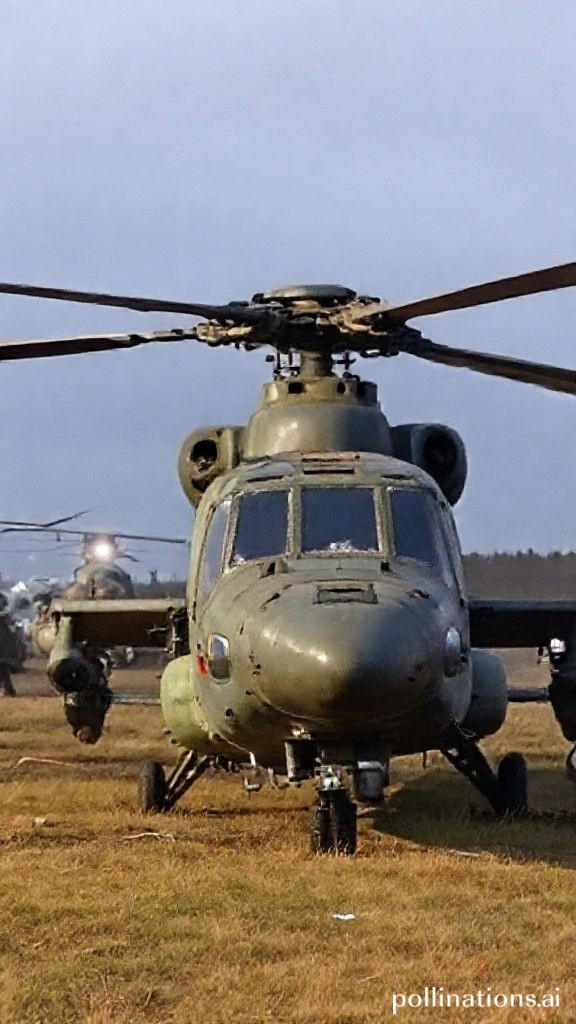
The Scrapped Russian Helicopter Deal A Web of Questions
In November 2021, the Philippine government signed a deal with Russian state-owned arms manufacturer Sovtechnoexport for 16 Mi-17 heavy-lift helicopters, valued at $215 million. However, in recent months, the contract has been scrapped, sparking widespread scrutiny and raised questions about the decision-making process.
Contradictory Narratives Emerge
Adolfo Paglinawan, a political analyst and author, highlights the discrepancies between the initial public narrative and subsequent revelations. According to Paglinawan, the Armed Forces of the Philippines (AFP) initially claimed that the acquisition was canceled during the administration of former president Rodrigo Duterte. However, Senior Undersecretary Jose Faustino Jr. contradicted this claim, stating that the contract had not been officially canceled and was undergoing review.
Russian Ambassador Corroborates Statement
Russian Ambassador Marat Pavlov corroborated Faustino's statement, emphasizing that the government had not yet officially notified Moscow of any decision to cancel the purchase agreement. Pavlov noted that one of the Mi-17s had been ready for delivery since June but was not accepted by the Philippine government.
Undue Political Influence Raises Concerns
Paglinawan criticizes what he describes as undue political influence, citing lobbying efforts by Philippine Ambassador to Washington Jose Manuel Romualdez to cancel the deal. According to Paglinawan, two days before Faustino and Pavlov made their disclosures, the US allegedly provided $100 million in military funding to the Philippines as compensation to scrap the helicopter deal with Russia.
Replacement Helicopters A Different Story
President Ferdinand Marcos Jr. referred to a replacement supply of helicopters from the United States via Poland, alluding to the P32-billion contract for 32 Blackhawk helicopters signed in February 2022 under the Duterte administration. However, Paglinawan points out that Blackhawks are not heavy-lift helicopters and were intended to augment the first contract for 16 Blackhawks ordered a year earlier to decommission the Air Force's old fleet of Huey helicopters.
Operational Risks and Humanitarian Concerns
Paglinawan cautions about the operational risks associated with relying on Blackhawk helicopters, noting that some Blackhawks were forced to make emergency landings before reaching their destinations due to severe weather caused by Typhoon Tino. He emphasizes that the Mi-17s are essential for strengthening humanitarian assistance and questions whether the AFP is prioritizing national interest over foreign influence.
Conclusion Multitudinous Questions Remain
The scrapped Russian helicopter deal raises numerous questions about the decision-making process and the role of foreign influence in Philippine military procurement. As the government continues to grapple with the consequences of canceling the deal, experts will continue to scrutinize the public narrative and highlight discrepancies that undermine transparency and accountability.
Key Takeaways
The deal for 16 Mi-17 heavy-lift helicopters was signed in November 2021 but has since been scrapped.
Initial claims of cancellation by the Armed Forces of the Philippines (AFP) were contradicted by Senior Undersecretary Jose Faustino Jr. and Russian Ambassador Marat Pavlov.
President Ferdinand Marcos Jr. referred to a replacement supply of helicopters from the United States via Poland.
The scrapped deal raises concerns about operational risks, humanitarian assistance, and prioritization of national interest over foreign influence.
For Professionals in 2025
As professionals in the field of military procurement, it is essential to stay informed about developments and scrutinize public narratives to ensure that the interests of all stakeholders are represented.
The scrapped Russian helicopter deal serves as a reminder of the importance of transparency, accountability, and effective decision-making in ensuring the success of complex transactions.

Popular Tools
Recent Posts