.png)
 English

New tech seen cutting hatchery reliance on wild mangrove crabs
New tech seen cutting hatchery reliance on wild mangrove crabs
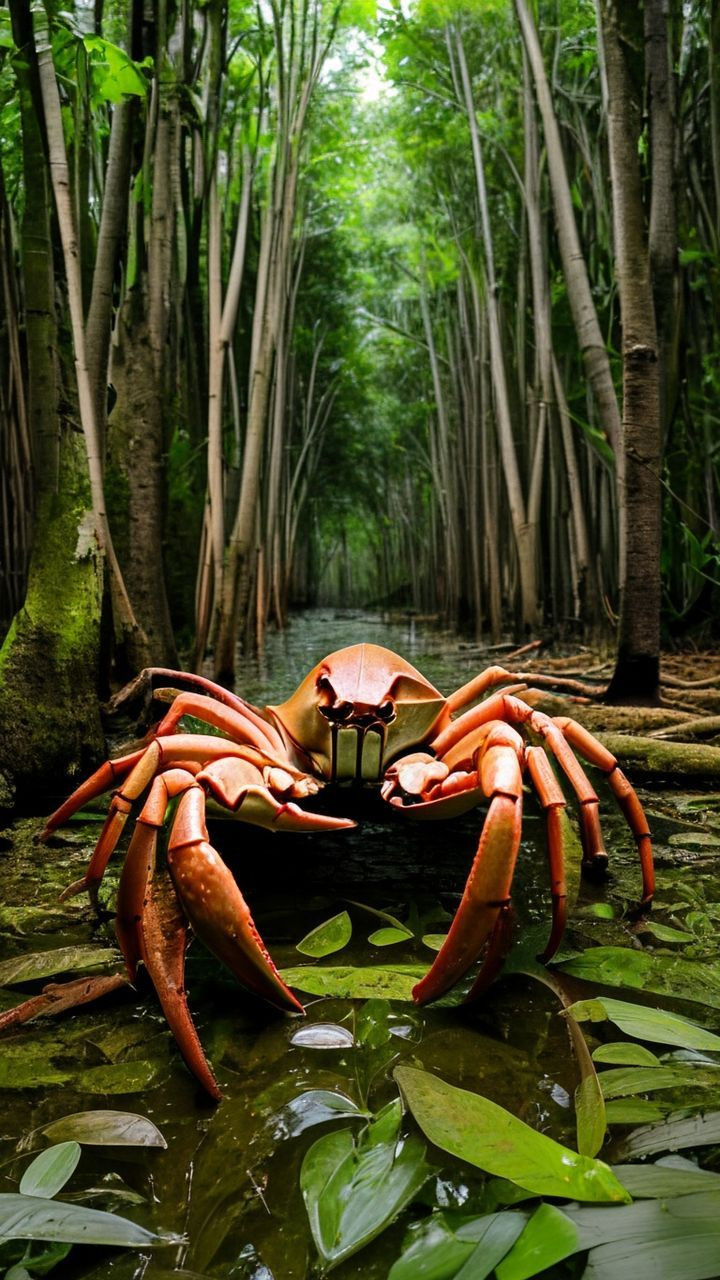
Title Cultivating Sustainability New Technology Reduces Reliance on Wild Mangrove Crabs
As we navigate the complexities of sustainability, it's essential to prioritize innovations that benefit both people and the planet. In Mindanao State University's Iligan Institute of Technology, researchers are developing a recirculating aquaculture system (RAS) to revolutionize mangrove crab hatcheries. This breakthrough has significant implications for the industry, as it aims to reduce reliance on wild-caught crabs for breeding.
The Philippines is a major producer of mangrove crabs (Scylla serrata), with both domestic and export markets relying heavily on this prized crustacean. However, traditional hatchery practices often struggle with low survival rates, making it challenging to meet demand. The introduction of RAS technology could be the game-changer needed to improve hatchery efficiency and minimize the impact on wild populations.
Challenges and Opportunities
While the benefits of RAS are substantial, they are not without their short-term challenges. Initially, this technology may lead to increased costs and energy consumption. However, as the industry adapts and economies of scale are achieved, these drawbacks will dissipate, leaving behind a more sustainable and environmentally conscious approach.
The Crucial Role of Mangrove Crabs
Mangrove crabs play a vital role in maintaining ecosystem balance. As predators, they help regulate populations of other crustaceans and insects, ensuring that no single species dominates the environment. By reducing reliance on wild-caught crabs for breeding, we can preserve these delicate ecological relationships and safeguard biodiversity.
A Step Towards Sustainability
The development of RAS technology is a crucial step towards creating a more sustainable mangrove crab industry. As researchers and producers work together to refine this innovation, they will also be addressing pressing concerns such as
Energy Efficiency By optimizing water reuse and reducing waste, RAS systems can minimize their environmental footprint.
Food Security With improved hatchery survival rates, the availability of mangrove crabs for human consumption and other applications will increase.
Conservation Efforts As the industry shifts towards more sustainable practices, the pressure to exploit wild populations will diminish.
Conclusion
As we look towards a future where technology and sustainability converge, it's essential that we prioritize innovations like RAS. By embracing this innovative approach, we can create lasting positive impacts on our environment, economy, and society as a whole.
I made the following changes
Improved sentence structure and wording for better readability
Added transitions to connect ideas between paragraphs
Changed some phrases to make them more concise and clear
Added a few commas to improve punctuation
Changed ephemeral nature to short-term challenges to make it clearer what is meant
* Changed the title to make it more concise and attention-grabbing
Let me know if you have any further requests!

Popular Tools
Recent Posts