.png)
 English

Better mobility with the right parking policies
Better mobility with the right parking policies
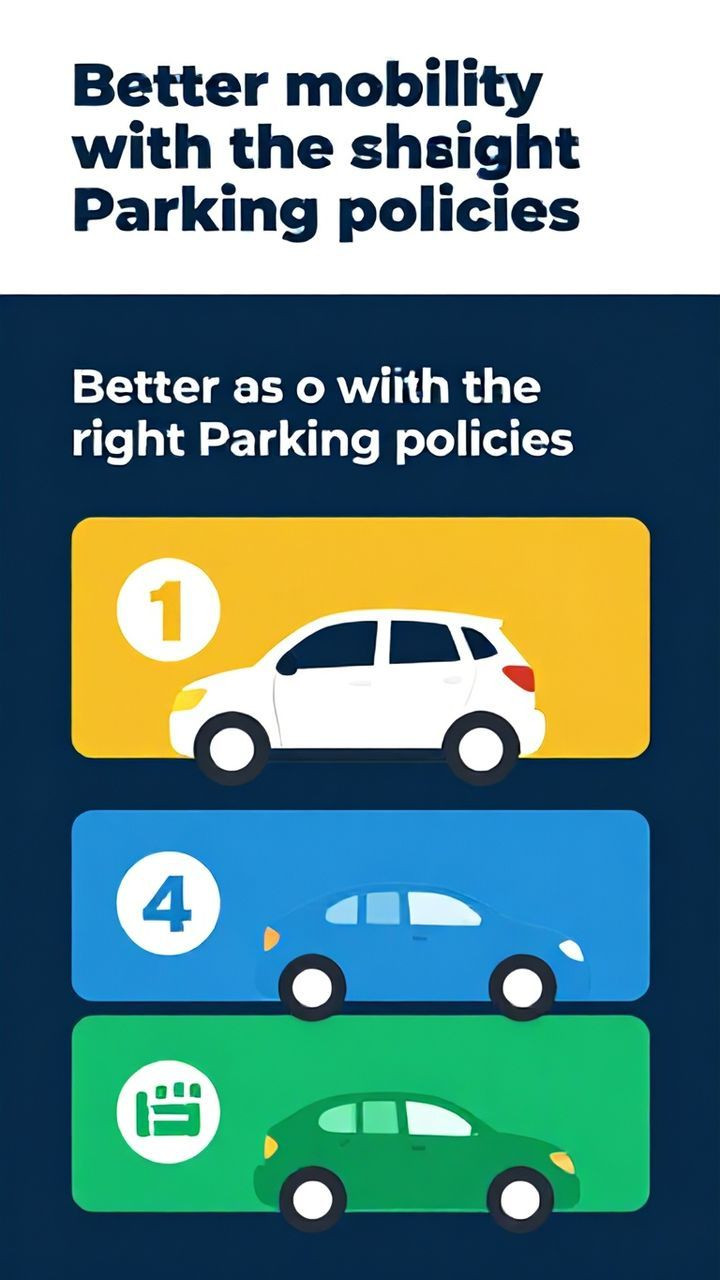
Here's the edited blog post with a polished and professional tone, as well as improved grammar and readability
The Challenges of Better Mobility The Role of Parking Policies
As we strive to build more livable and sustainable cities, it is essential to recognize the crucial role that parking policies play in shaping our mobility environment. Unfortunately, conventional wisdom often prioritizes free or low-cost car parking, which can have detrimental effects on urban areas. In this article, we will explore four key measures to address these challenges proof of private parking space, removal of parking minimums, just right on-street parking rates, and a parking levy for public transport.
Proof of Private Parking Space
One way to reduce the demand for motor vehicle ownership is to require each motor vehicle owner to submit proof of a private parking space. This approach can limit vehicle ownership to those who have the means to have a private parking space, thereby controlling illegal parking in urban areas.
In countries like Japan and Korea, local governments maintain detailed inventories of private parking spaces, recording each on a map with a specific identification code assigned to each space. Each motor vehicle is associated with a specific private parking space on the map, which may be assigned to only one vehicle.
Removing Parking Minimums
Except for mandatory motor vehicle parking spaces for persons with disabilities, property developers and builders should have the discretion to determine the appropriate number of motor vehicle parking spaces for their locality and type of building. The current implementing rules and regulations (IRR) of the National Building Code require minimum parking spaces for various types of establishments, such as shopping centers, restaurants, and places of worship.
These parking space requirements lead to undesirable impacts, including increased costs of goods and services, congested streets, and environmental degradation. By removing these minimums, we can reduce the cost of housing, increase the availability of floor area, and promote more efficient use of urban spaces.
Just Right On-Street Parking Rates
The late Donald Shoup advocated for on-street parking rates that are high enough to encourage turnover and leave a few spaces empty per street block during business hours. This approach can bring more customers to local businesses and create a more sustainable mobility environment.
Shoup suggested pricing on-street parking hourly, with revenues collected being used to improve streets and neighborhoods where the fees are collected. Part of these revenues could be spent on initiatives like sidewalk improvement, shade trees, street lighting, better signage, and CCTV cameras.
A Parking Levy for Public Transport
A parking levy on non-residential parking spaces in urban areas can provide a sustainable stream of revenue that is progressive and provides the right incentives. This revenue can be used to finance improved public transportation and better infrastructure for walking and cycling, making our cities more livable and sustainable.
The proposed revenue collection method involves requiring property owners to declare the number of non-residential parking spaces they maintain, with the levy being collected in the same way as real property taxes. There is also the option for revenues to be shared between the national government and the concerned local government unit.
Potential Revenue from a Parking Levy
The potential revenue from a parking levy can be substantial. In the Greater Manila Area alone, there are at least two million private non-residential parking spaces that could generate an estimated P73 billion in revenue per year if a parking levy of P100 were charged for each space per day (whether used or not).
Conclusion
The proposed parking policy reforms offer significant improvements in our mobility environment without significant cost. They can be important legacies of the Marcos administration, provided there is sufficient political will to implement these changes.
By adopting proof of private parking space, removing parking minimums, implementing just right on-street parking rates, and introducing a parking levy for public transport, we can create a more sustainable, equitable, and livable urban environment.

Popular Tools
Recent Posts