.png)
 English

AI helps Latin scholars decipher ancient Roman texts
AI helps Latin scholars decipher ancient Roman texts
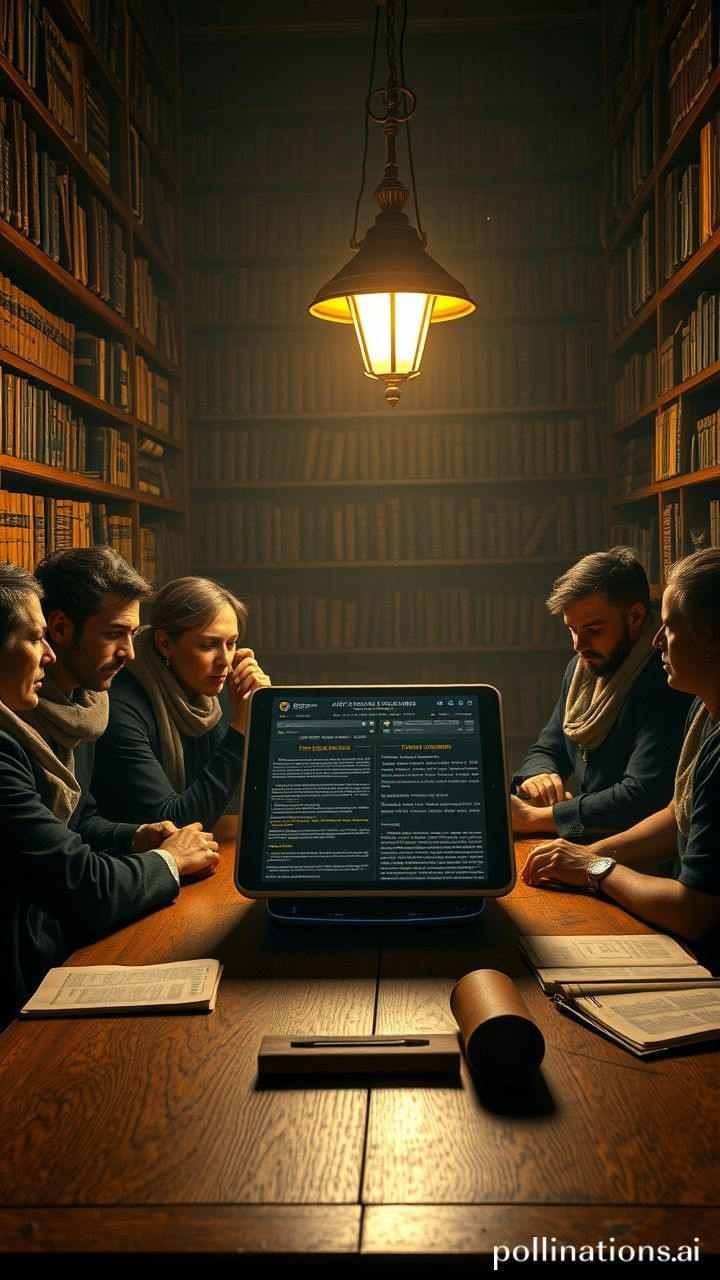
The Ultimate Guide to AI Unlocking Ancient Roman Texts
In the quest to uncover the secrets of ancient Rome, Latin scholars face a daunting challenge deciphering over 1,500 inscriptions discovered each year. However, artificial intelligence (AI) has emerged as a powerful tool to aid researchers in the humanities.
Deciphering Ancient Roman Texts A Historical Challenge
Latin inscriptions offer a unique window into daily life during ancient Rome. Yet, these texts have often been damaged over time, making it difficult for historians to determine their meaning and significance. Traditionally, scholars rely on manual searches through vast library and museum collections.
The Solution A Generative Neural Network
Google's AI lab DeepMind has developed a generative neural network called Aeneas, which can identify complex relationships between types of data. Trained to help Latin scholars decipher ancient Roman texts, the model provides insights into location, date, and meaning.
Training Aeneas
Aeneas was trained on massive datasets of Latin transcriptions from across the vast Roman Empire, spanning five million square kilometers over two millennia. The model was tested on a famous inscription, Res Gestae Divi Augusti, detailing Rome's first emperor Augustus' accomplishments.
Results A Powerful Tool for Historians
Aeneas provided a useful starting point in 90 percent of cases, with the best results achieved when historians collaborated with AI. The model can estimate location among Roman provinces, provide a decade of production, and even suggest missing sections' content.
The Panacea AI in the Humanities
By developing Aeneas, researchers demonstrate how AI technology can meaningfully support the humanities by addressing concrete challenges faced by historians. This marks a significant shift towards embracing AI as a solution for many challenges in the humanities.
Conclusion
Aeneas is an exemplary demonstration of how AI can enhance human research without replacing it. By combining the strengths of both humans and machines, we can unlock new insights and knowledge previously unimaginable. As AI continues to evolve, we can expect even more innovative applications in the humanities.
Future Directions Unlocking New Insights
As Aeneas continues to improve, future developments may include
Expanding the dataset to include inscriptions from different time periods and regions
Incorporating advanced natural language processing techniques for improved decipherment
Developing a user-friendly interface for historians to interact with the AI model
Staying Ahead of the Curve AI in Treasure Hunting
As we move forward, it will be essential for professionals in treasure hunting and archaeology to stay up-to-date on AI developments. By embracing these technologies, we can unlock new discoveries and insights previously unimaginable.
Keywords* AI, Latin inscriptions, ancient Roman texts, generative neural network, Aeneas, Google DeepMind, historical research, humanities, treasure hunting

Popular Tools
Recent Posts