.png)
 English

40 migratory species proposed for global conservation at UN CMS COP15
40 migratory species proposed for global conservation at UN CMS COP15
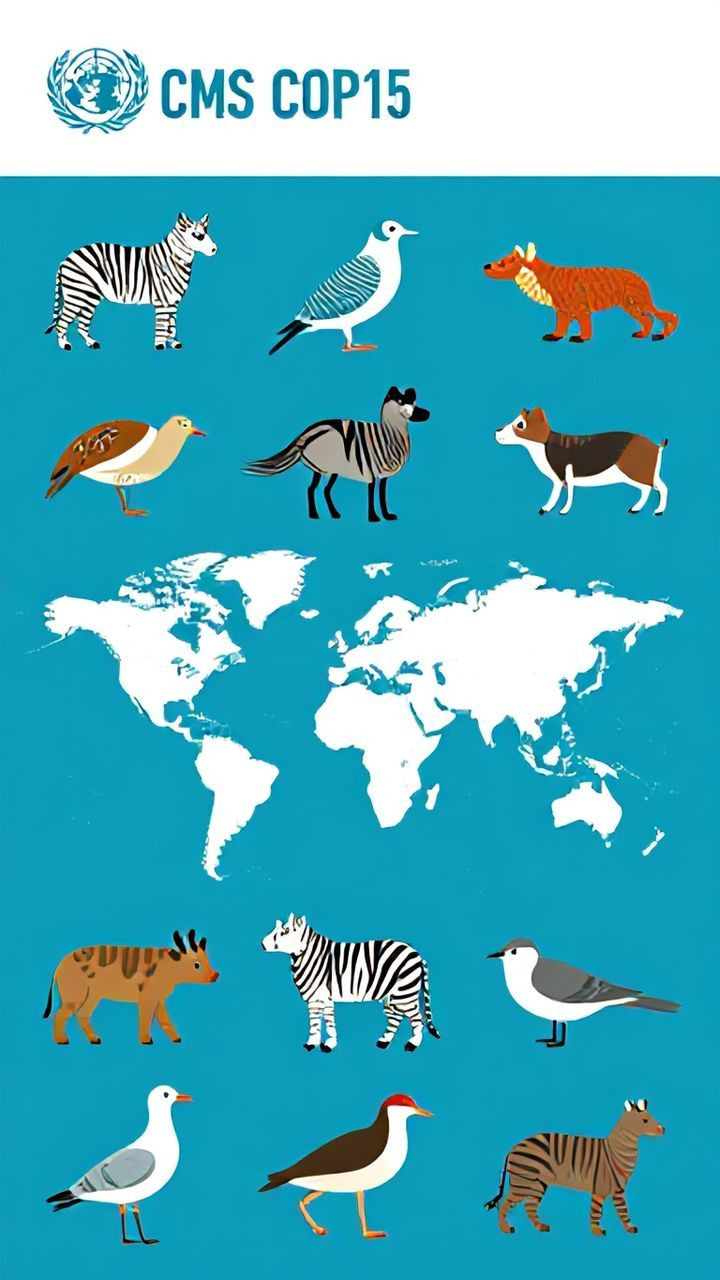
Climate Scientists 40 Migratory Species Proposed for Global Conservation at UN CMS COP15
As climate change continues to pose a significant threat to migratory species worldwide, the Convention on the Conservation of Migratory Species of Wild Animals (CMS) has proposed listing approximately 40 new species on its appendices. This critical move aims to galvanize international efforts to protect these iconic creatures and their habitats.
What is CMS?
The CMS is an environmental treaty administered by the United Nations, which brings together governments and stakeholders to address the conservation of migratory species and their habitats. The Convention has two appendices Appendix I, which focuses on endangered species, and Appendix II, which highlights species that warrant international cooperation.
Why are Migratory Species Important?
Migratory species play a vital role in maintaining healthy ecosystems. These animals cross at least one national border as part of their natural life cycles, providing essential services like pollination, seed dispersal, carbon storage, and pest control. The loss of these species can have significant impacts on communities reliant on them for food and income.
Examples from the 42 Proposed Species
The proposed list includes several remarkable examples
The striped hyena (Hyaena hyaena) is a vital scavenger that helps recycle nutrients and prevent disease through carrion consumption. Unfortunately, its global population is estimated to be fewer than 10,000 mature individuals.
The snowy owl (Bubo scandiacus) has experienced a 30% decline in its global population over the past three decades, with BirdLife International declaring it extinct in Sweden.
Population Declines A Growing Concern
The great hammerhead shark (Sphyrna mokarran) is another example of a species in dire need of conservation. Its population has declined steeply due to overexploitation in fisheries that affects it at all life stages, both in nearshore and offshore waters. As an apex predator, its loss threatens to destabilize the marine food web and compromise the overall health of ocean ecosystems.
Other Migratory Species on the Proposed List
The list also includes
Cheetah (Acinonyx jubatus)
Striped hyena (Hyaena hyaena)
Gadfly petrels (26 species of the genera Pterodroma and Pseudobulweria)
Flesh-footed shearwater (Ardenna carneipes)
Hudsonian whimbrel (Numenius phaeopus hudsonicus)
Hudsonian godwit (Limosa haemastica)
Lesser yellowlegs (Tringa flavipes)
Iberá seedeater (Sporophila iberaensis)
Giant otter (Pteronura brasiliensis)
Pelagic thresher shark, bigeye thresher shark, and common thresher shark (Alopias pelagicus, Alopias superciliosus, Alopias vulpinus)
Patagonian narrownose smooth-hound (Mustelus schmitti)
Scalloped hammerhead shark (Sphyrna lewini)
Angular angelshark (Squatina guggenheim)
Spotted sorubim (Pseudoplatystoma corruscans)
Global Action is Essential
As the pressures on migratory species intensify, international commitment to take effective measures has never been more essential. CMS executive secretary Amy Fraenkel emphasized that The proposals to list 42 new species on the CMS appendices reflect the urgent need for coordinated global action. At COP15, governments have an opportunity to strengthen efforts to safeguard these species.
Conclusion
As climate change continues to pose a significant threat to migratory species worldwide, it is imperative that we take immediate action to protect these iconic creatures and their habitats. The proposed listing of approximately 40 new species on the CMS appendices is a critical step in this direction.
Key Statistics
Approximately 40 new species proposed for listing on the CMS appendices
Striped hyena population estimated to be fewer than 10,000 mature individuals
Snowy owl population declined by 30% over the past three decades
Great hammerhead shark population declined steeply due to overexploitation
References
BirdLife International. (2020). Snowy Owl.
Convention on the Conservation of Migratory Species of Wild Animals (CMS).
United Nations Environment Programme (UNEP).
Innovations and Solutions
Senescence, or the decline in population size over time, can be an effective indicator of the health of migratory species.
Innovative conservation efforts, such as habitat restoration and connectivity corridors, can help protect migratory species and their habitats.
International cooperation and coordination are essential for addressing the complex challenges facing migratory species.
Keywords Climate change, migratory species, CMS, conservation, senescence, global action

Popular Tools
Recent Posts