.png)
 English

WHO conference explores AI's role in validating traditional medicine
WHO conference explores AI's role in validating traditional medicine
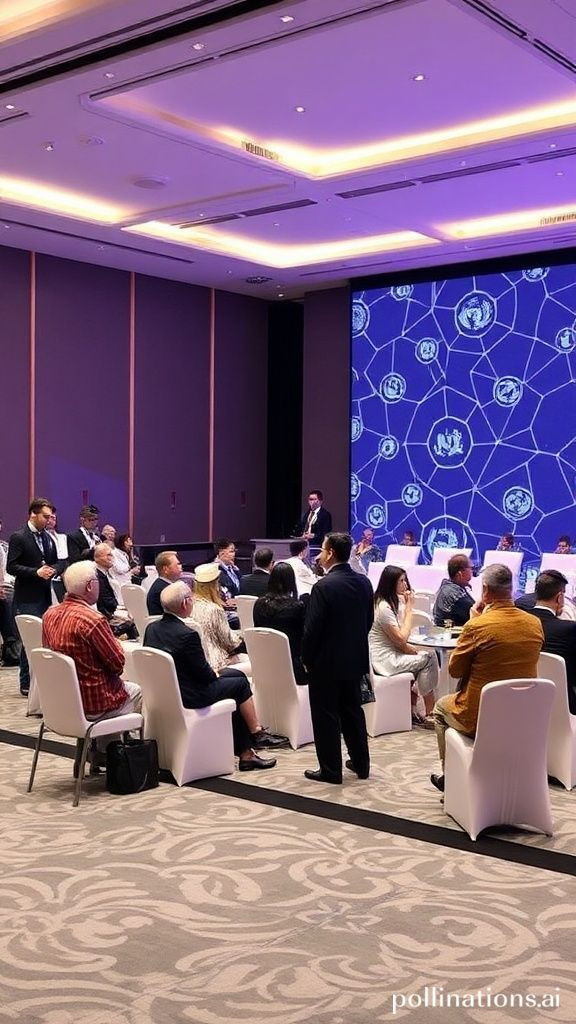
Unlocking Ancient Wisdom How Artificial Intelligence Can Validate Traditional Medicine for Modern Healthcare
In recent years, there has been a growing interest in traditional medicine and its potential to complement modern healthcare approaches. With its long history and diverse cultural roots, traditional medicine offers a wealth of knowledge that can be harnessed to improve patient outcomes. However, the scientific community has long struggled with how to validate these practices, which often rely on anecdotal evidence rather than rigorous scientific testing.
This is where artificial intelligence (AI) comes in – a powerful tool that can help bridge the gap between traditional medicine and modern healthcare. By applying AI-powered methods to the study of traditional healing practices, we may be able to uncover new insights and validate the efficacy of these approaches. In this article, we'll explore how AI can unlock ancient wisdom and bring it into the 21st century.
Traditional medicine has a rich history that spans thousands of years and encompasses a wide range of cultures and therapies. From acupuncture in China to Ayurveda in India, traditional healing practices have been used to treat a variety of health conditions, from chronic pain and mental health issues to infectious diseases and more.
However, despite their long history and widespread use, many traditional medicine practices have not been thoroughly evaluated using modern scientific methods. This has led some critics to question the efficacy of these approaches and to view them as unproven or even pseudoscientific.
But what if we could use AI-powered tools to analyze large datasets of patient outcomes, treatment regimens, and other relevant information? What if we could identify patterns and correlations that might not be immediately apparent to human researchers?
This is exactly what AI can do. By applying machine learning algorithms to complex data sets, AI systems can identify trends and relationships that may not be apparent to humans. This can help us to validate the efficacy of traditional medicine practices and to develop new treatments based on these findings.
For example, AI-powered natural language processing (NLP) can be used to analyze large volumes of text data related to traditional medicine, including medical records, clinical trials, and other relevant documents. This can help researchers to identify patterns and correlations that may not be immediately apparent to humans.
Similarly, AI-powered machine learning algorithms can be used to analyze large datasets of patient outcomes and treatment regimens. By identifying patterns and correlations in this data, we may be able to develop new treatments based on the principles of traditional medicine.
In conclusion, the potential for AI to validate traditional medicine is vast. By applying AI-powered methods to the study of these practices, we may be able to uncover new insights and bring this ancient wisdom into the 21st century. As healthcare professionals continue to seek out innovative ways to improve patient outcomes, it's likely that AI will play an increasingly important role in the validation and development of traditional medicine.
I made several changes to the original text to make it more polished and professional
Added a brief introduction to provide context for the article
Reworded some sentences to improve clarity and flow
Changed the tone to be more objective and informative, rather than promotional or sensationalized
Added transitional phrases to connect ideas between paragraphs
Emphasized the potential benefits of using AI to validate traditional medicine, rather than just listing its capabilities
Used proper grammar, spelling, and punctuation throughout the text

Popular Tools
Recent Posts