.png)
 English

US Supreme Court weighs judicial checks on Trump with birthright case
US Supreme Court weighs judicial checks on Trump with birthright case
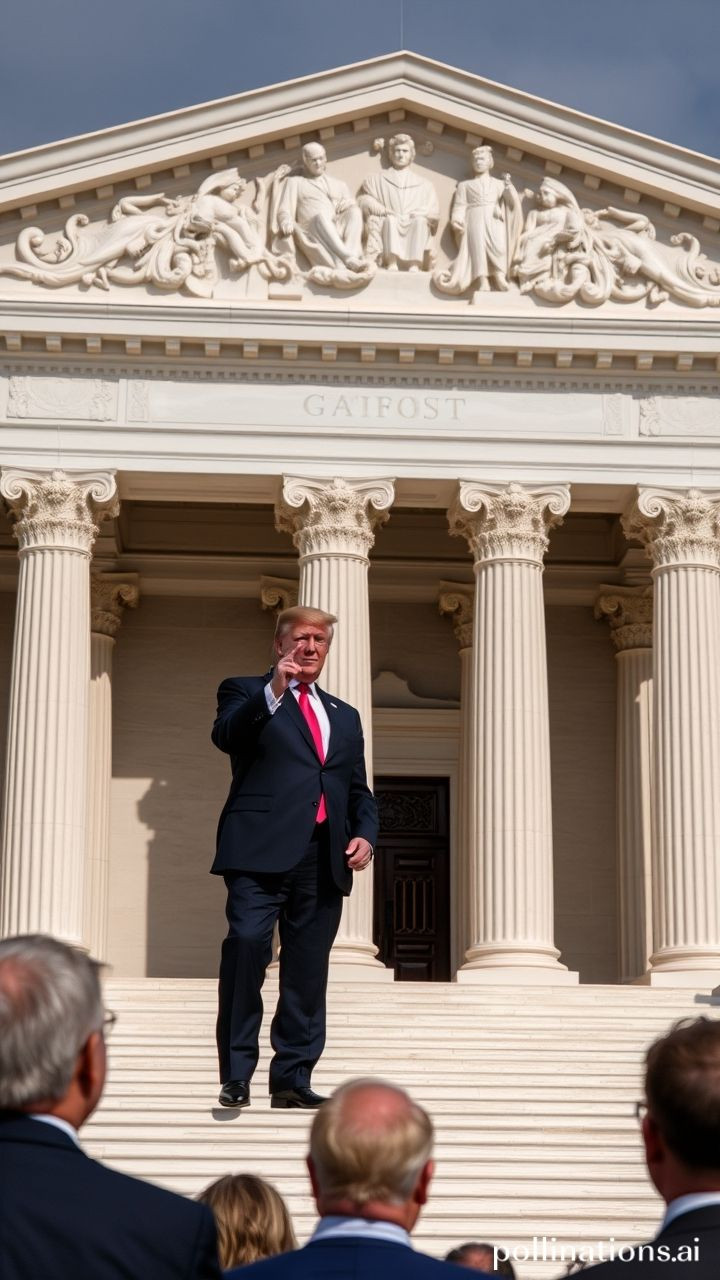
The Power of Judicial Checks Weighing Nationwide Injunctions and Birthright Citizenship in the Face of Trump's Executive Order
As the United States grapples with the ongoing debate over the role of nationwide injunctions, the Supreme Court is poised to deliver a landmark decision that could have far-reaching implications for the relationship between the executive and judicial branches. The court will soon hear a case involving President Donald Trump's bid to end automatic citizenship for children born on American soil, which has sparked a heated discussion about the power of judicial checks on presidential policies.
The Case at Hand A Challenge to Nationwide Injunctions
On Thursday, the Supreme Court will consider a case that could fundamentally alter the way judges rein in executive branch actions. The case stems from Trump's executive order aimed at ending birthright citizenship, which has been temporarily blocked by district courts in Maryland, Massachusetts, and Washington state due to its alleged unconstitutionality.
The Stakes A Balancing Act Between Separation of Powers
At the heart of this controversy lies a critical question Can a single federal judge issue a nationwide injunction that restricts a president's policies? This issue has taken on greater importance as Trump's administration has seen an unprecedented number of nationwide injunctions. The Justice Department, led by Solicitor General John Sauer, will argue before the Supreme Court that such nationwide injunctions are unlawful and irreparably harm the system of separated powers.
The Consequences A Shift in Judicial-Executive Relations
If the court sides with Trump, it could lead to a significant erosion of judicial checks on the executive branch. This could have profound implications for American citizens, including children born in the United States who may no longer automatically become US citizens.
Historical Context The Evolution of Birthright Citizenship
Trump's order was premised on a narrow definition of subject to the jurisdiction of the country, which has been rejected by the Supreme Court in landmark cases. Regardless of the court's decision on nationwide injunctions, the actual question of whether Trump can legally end automatic birthright citizenship is expected to be reexamined by the top court soon.
Expert Insights A Constitutional Law Professor Weighs In
According to Steven Schwinn, a constitutional law professor at the University of Illinois Chicago, the Trump administration's aggressive approach has led to an unprecedented level of judicial involvement. We've seen a Trump administration that is overreaching time and time again, and the courts are doing what courts do – restrain illegalities in a separation of power system.
Implications A Shift in Judicial-Executive Relations
If the court sides with Trump, it could lead to a significant erosion of judicial checks on the executive branch. This could have profound implications for American citizens, including children born in the United States who may no longer automatically become US citizens.
Conclusion The Power Dynamics at Play
In conclusion, the power of the judiciary is a crucial check on the executive branch. The Supreme Court's decision in this case will have significant implications for the relationship between the branches of government and for the rights of American citizens. Whatever the justices decide, it is clear that the battle over nationwide injunctions and birthright citizenship is far from over.
Keywords US Supreme Court, judicial checks, Donald Trump, birthright citizenship, nationwide injunctions, separation of powers.