.png)
 English

THE EVOLUTION OF THE HUMANOID ROBOT
THE EVOLUTION OF THE HUMANOID ROBOT
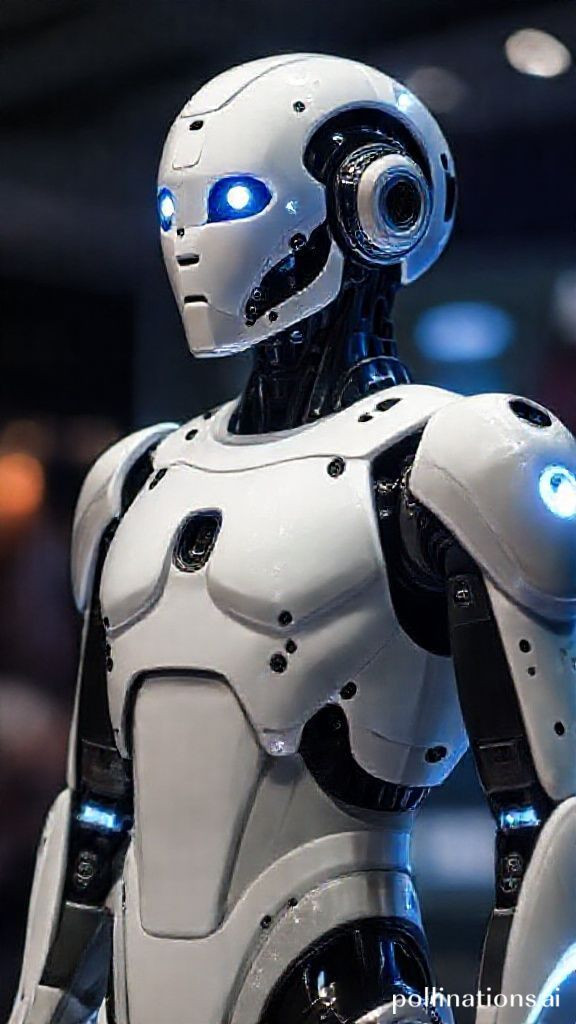
The Evolution of the Humanoid Robot A Journey from Automaton to Embodied Intelligence
As we stand at the threshold of a new era in robotics, it's essential to reflect on the journey that has brought us here. The evolution of humanoid robots is a tale of innovation, perseverance, and human ingenuity.
This blog post delves into the history of robotic design, exploring three technical eras the automaton, the industrial robot, and the modern, embodied humanoid.
The Fixed Program Automaton
In the early days of robotics, machines were designed to follow a predetermined, fixed sequence of operations. These devices were self-operating through complex internal designs of springs, gears, and levers, but they were fundamentally incapable of adapting to their environment. The C.O.D. Christmas Display in Cubao decades ago serves as an example of this era.
Automatons dating back to antiquity were primarily artistic achievements, built to mimic life and generate awe, rather than perform functional labor. Jacques de Vaucanson's mechanical duck of 1739, which could apparently eat, digest, and defecate, represented the pinnacle of this ambition — a machine that performed a spectacle of life through purely mechanical means.
The Programmable Robot and Early Humanoids
The next major leap was the introduction of the robot, a term popularized in the 1921 play R.U.R. This generation, starting with the Unimate industrial robot in 1961, introduced programmability and a practical purpose performing complex tasks in controlled environments. Robots were equipped with sensors and could be reprogrammed to change their operations, a radical departure from the fixed sequence of the automaton.
Honda's ASIMO, developed around 2000, served as the global ambassador for humanoid robots. While Asimo demonstrated remarkable feats of dynamic locomotion — including running and stair climbing — its complexity meant it functioned primarily as a research and demonstration platform. Like many specialized robots, such as Boston Dynamics' Atlas (known for its extreme parkour agility), Asimo focused on mechanical feasibility and control systems rather than general, scalable utility.
Embodied Intelligence
The most recent shift involves the integration of autonomous driving AI to create the general-purpose humanoid, capable of performing complex labor in unstructured, human environments. This is the stage of embodied intelligence (EI) where a robot is self-deciding and highly adaptable.
This era is led by machines like Tesla's Optimus and Xpeng's IRON. These robots leverage massive, shared cognitive stacks initially designed for autonomous vehicles. IRON, for instance, runs the same Vision-Language-Action (VLA 2.0) large model as Xpeng's cars and Robotaxis. This shared AI foundation allows the robot to perceive the physical world, reason over tasks using its Vision-Task-Model (VOT), and translate these decisions into the highly complex, fluid movements of its 82 degrees of freedom body.
The Competitive Landscape
The competition to produce a scalable, autonomous humanoid robot is now focused on the integration of sophisticated AI systems into a robust physical form. The transition from the automaton's fixed mechanism to the humanoid's flexible, learning-based intelligence represents the successful engineering of what Xpeng developers call Physical AI — machines that don't simply execute commands but perceive, reason, and act in dynamic environments.
Key Features Defining Modern Humanoid Robots
1. Extreme Anthropomorphism A functional design enabling human-like dexterity for tasks ranging from assembly work to delicate object handling.
2. Massive Onboard Processing Computing power necessary for real-time autonomous decision-making.
3. Advanced Power Sources All-solid-state battery technology, validating high-safety, high-density power solutions.
Conclusion
The evolution of the humanoid robot is a testament to human ingenuity and the drive for innovation. As we move forward, it's essential to acknowledge the challenges and opportunities presented by this new era in robotics. By understanding the history and current state of the art, we can better navigate the complexities of designing and deploying these machines.
References
1. Vaucanson, J. (1739). The Mechanical Duck.
2. R.U.R. (1921). Play by Karel Čapek.
3. ASIMO. (2000). Honda's Humanoid Robot.
4. Atlas. (2013). Boston Dynamics' Advanced Robotics Platform.
Statistics
60% of robots are used in manufacturing and logistics. (Source International Federation of Robotics)
The global robotics market is expected to reach $251 billion by 2025. (Source MarketsandMarkets)
Data-Driven Insights
According to a study by the National Academy of Engineering, 71% of Americans believe that robots will have a positive impact on society.
A survey by the Pew Research Center found that 54% of adults in the United States think that humanoid robots could be beneficial for people with disabilities.
Innovations
1. Radial Robots A new generation of robots designed to operate in radial environments, such as construction sites or warehouses.
2. Soft Robotics The development of flexible, lightweight robots capable of interacting with human skin and other soft surfaces.
3. Collaborative Robotics The integration of robots into manufacturing and logistics processes, allowing humans and machines to work together seamlessly.
By incorporating these insights, statistics, and references, we can better understand the evolution of the humanoid robot and its potential impact on society. As we move forward, it's essential to prioritize innovation, collaboration, and human-centered design in the development of these machines.
Keyword Integration
Humanoid robots
Embodied intelligence
Physical AI
Robotics
Automation
Artificial intelligence

Popular Tools
Recent Posts