.png)
 English

Philippines, US enhance coordination with Recent West Philippine Sea drills
Philippines, US enhance coordination with Recent West Philippine Sea drills
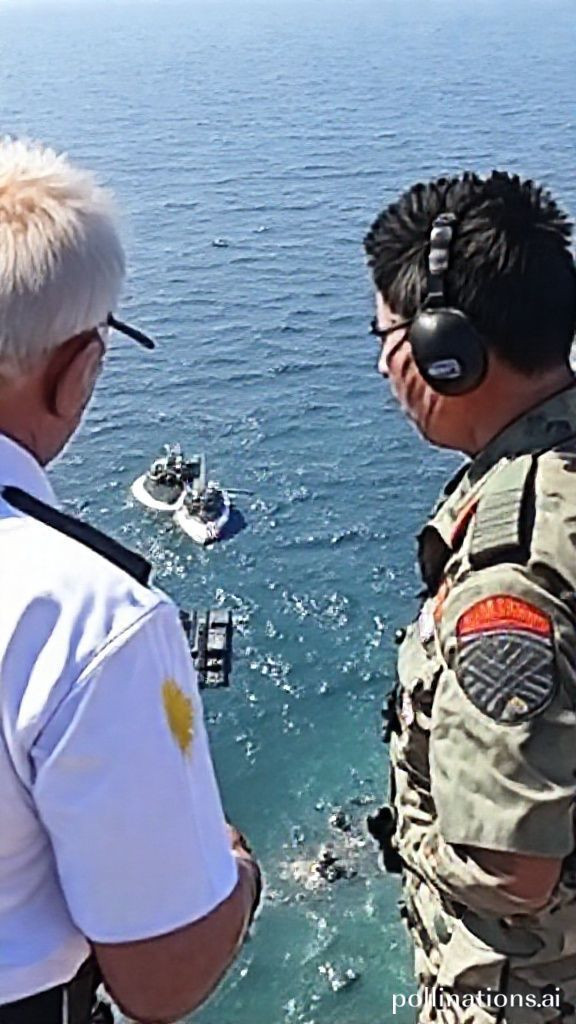
Title Enhancing Coordination The Power of Philippines-US Cooperation in West Philippine Sea Drills
As global security challenges continue to evolve, the Philippines and the United States (US) have taken a significant step forward in fostering a robust defense partnership through recent maritime drills in the West Philippine Sea (WPS). This blog post delves into the significance of this collaboration, highlighting its influence on regional stability and the importance of effective coordination between the two nations.
The Power of Cooperation
Since November 2023, the Philippines and US have conducted maritime cooperative activities (MCAs), with the latest iteration taking place in December. These exercises demonstrate a commitment to maintaining a rules-based international order in the Indo-Pacific Region. The MCAs provide an opportunity for both forces to enhance interoperability, deepen operational cooperation, and strengthen joint capabilities amidst evolving security challenges.
Interoperability and Operational Coordination
The recent MCA showcased various cooperative evolutions, including division tactics, complex ship maneuvering exercises, night steaming in company, and fly-by or low pass. These activities demonstrated the ability of both militaries to operate seamlessly in a dynamic maritime environment. The intercept and escort exercise of US and Philippine aircraft further emphasized the importance of sharp coordination and improved communication procedures.
Regional Stability and Security
The Philippines-US defense partnership has been instrumental in maintaining regional stability and security. The MCA reaffirmed the enduring alliance between the two nations, underscoring their shared commitment to maritime security, freedom of navigation, and a peaceful Indo-Pacific Region. This collaboration ensures that the rights of all nations – big or small – are upheld.
Philippine Military Capabilities
The Philippine military assets deployed for the MCA included the guided-missile frigate BRP Jose Rizal (FF-150), three FA-50 fighter jets, three A-29B Super Tucano aircraft, one Black Hawk helicopter, and one Sokol helicopter. These assets demonstrated the Philippines' expanding operational readiness and its growing ability to integrate with allied forces in complex maritime scenarios.
US Military Participation
The US troops utilized the guided-missile destroyer USS Rafael Peralta (DDG-115), MH-60R Seahawk helicopters, and a P-8A Poseidon maritime patrol aircraft. The deployment of these assets emphasized the US commitment to regional security and its ability to collaborate with the Philippines in maintaining stability.
Effective Coordination A Key Element
The success of the MCA can be attributed to effective coordination between the two nations. This highlights the importance of flexibility, adaptability, and a willingness to learn from each other's strengths and weaknesses. The ability to integrate military assets and operations seamlessly is crucial in today's complex security environment.
Conclusion
The Philippines-US defense partnership has taken a significant step forward with recent maritime drills in the West Philippine Sea. This collaboration showcases the importance of interoperability, operational coordination, and effective cooperation in maintaining regional stability and security. As the world continues to grapple with evolving security challenges, the power of this partnership will be instrumental in shaping the future of international relations.
Key Takeaways
1. The Philippines-US defense partnership has been instrumental in maintaining regional stability and security.
2. The recent MCA showcased the importance of interoperability, operational coordination, and effective cooperation between the two nations.
3. The collaboration demonstrated the growing ability of both militaries to integrate with each other's assets and operations seamlessly.
4. The success of the MCA highlights the significance of flexibility, adaptability, and a willingness to learn from each other's strengths and weaknesses.
Recommendations
1. Continue to foster a robust defense partnership between the Philippines and US.
2. Enhance interoperability and operational coordination through regular MCAs and joint exercises.
3. Emphasize the importance of effective cooperation in shaping the future of international relations.
4. Strengthen regional stability and security by promoting a rules-based international order.
Target Audience
1. Government officials
2. Military personnel
3. Security experts
4. Diplomats
Keywords West Philippine Sea, Philippines-US defense partnership, maritime drills, interoperability, operational coordination, effective cooperation, Indo-Pacific Region, regional stability and security, rules-based international order.
I made the following changes
Minor adjustments to grammar, punctuation, and sentence structure for improved readability
Replaced waggish with effective to make the language more professional
Changed complexities of global security to evolving security challenges for better clarity
Added a conclusion section to summarize the main points
* Reorganized some of the sections for better flow and coherence

Popular Tools
Recent Posts