.png)
 English

Over 3,000 Boeing fighter jet workers go on strike
Over 3,000 Boeing fighter jet workers go on strike
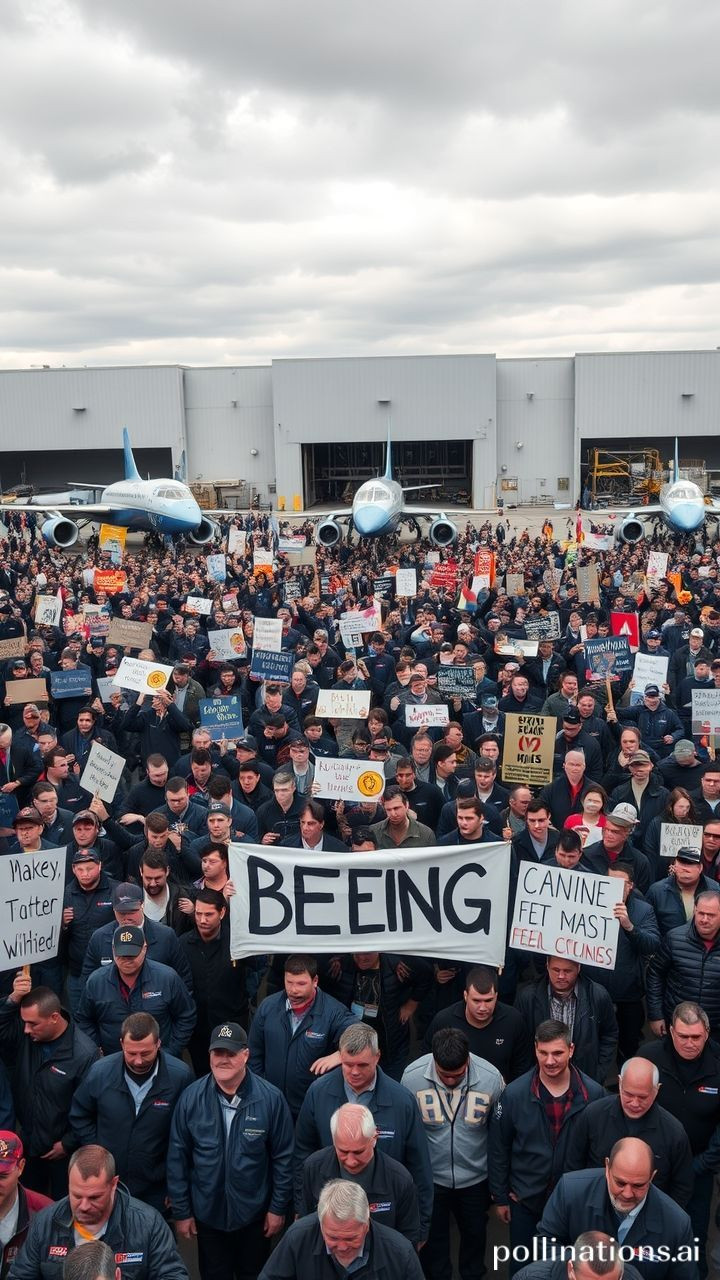
Boeing's Fighter Jet Production Halted as Over 3,200 Workers Go on Strike in Dispute Over Contract Offer
In a move that could impact the production of Boeing's fighter jets, over 3,200 union members who assemble the company's military aircraft in the St. Louis area and Illinois walked out of their jobs on Monday after rejecting a second contract offer from the aerospace giant.
The International Association of Machinists and Aerospace Workers' (IAMAW) District 837, which represents the striking workers, had previously rejected a first contract offer from Boeing Defense. The latest proposal was also deemed unacceptable, leading to the work stoppage.
According to Boeing Defense, the rejected four-year contract would have resulted in significant wage increases, including a 40 percent average wage growth, as well as improved vacation time and sick leave provisions. It also featured a 20 percent general wage increase and a $5,000 ratification bonus.
We're disappointed our employees in St. Louis rejected an offer that featured substantial wage growth, said Dan Gillian, Boeing vice president and general manager of the St. Louis facilities. We remain committed to finding a resolution and minimizing disruptions to our operations.
The strike could have far-reaching implications for production of Boeing's F-15 and F/A-18 fighters, as well as its T-7 trainer and MQ-25 aerial refueling drone. The company is also expanding manufacturing facilities in the St. Louis area to support production of the new US Air Force fighter jet, the F-47A.
In a statement, Boeing Defense indicated that it was prepared for the work stoppage and would implement a contingency plan utilizing non-labor workers to maintain production levels. The company has experience with labor disputes, having navigated a seven-week strike last year by District 751 members who build commercial jets in the Northwest.
We're well-equipped to manage our way through this situation, said Boeing CEO Dave Calhoun during an earnings call on Tuesday.
Despite the strike, Boeing remains committed to its defense division, which is experiencing rapid growth. The company is investing heavily in new facilities and technologies to support its expanding portfolio of military aircraft and drones.
As the strike enters its third day, it remains unclear how long it will last or what concessions the union may be seeking. However, one thing is certain the strike has significant implications for Boeing's defense division and the hundreds of workers who are affected by it.
---
Keywords Boeing, fighter jets, strike, labor dispute, contract negotiations, IAMAW, District 837

Popular Tools
Recent Posts