.png)
 English

MMDA's no-contact apprehension policy is back
MMDA's no-contact apprehension policy is back
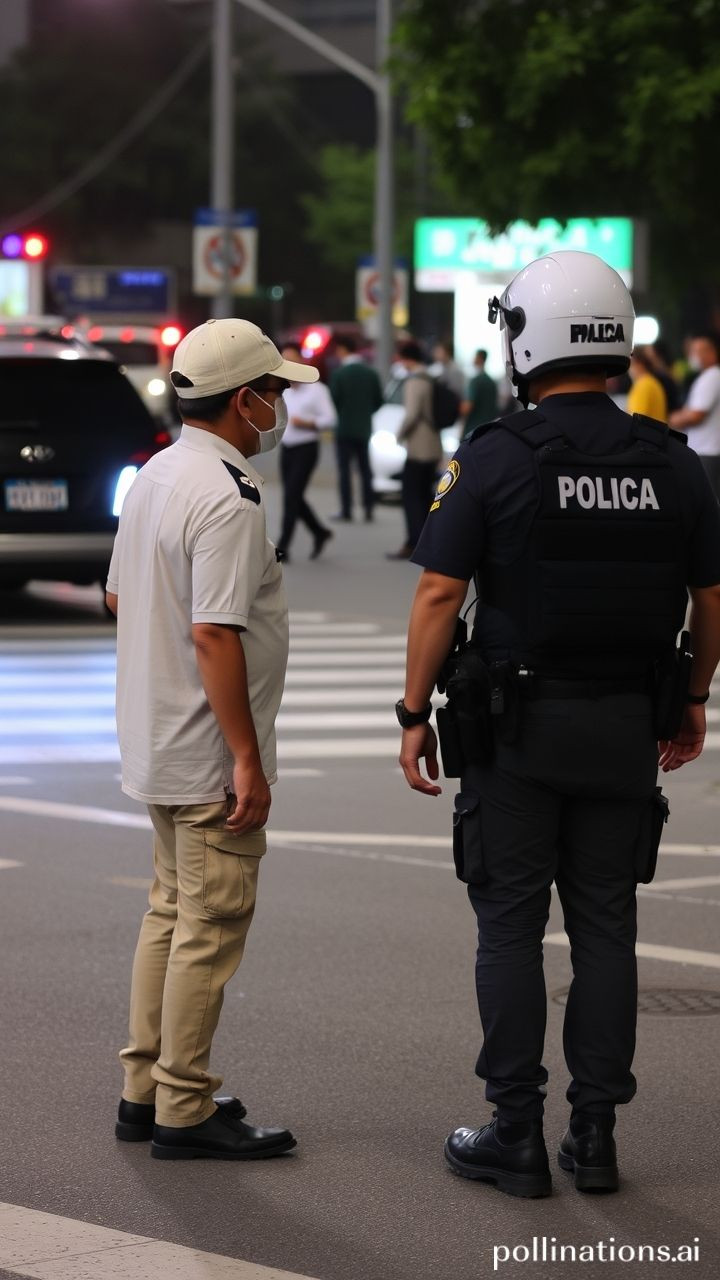
MMDA's No-Contact Apprehension Policy A New Era in Traffic Enforcement
The Metropolitan Manila Development Authority (MMDA) has fully reinstated its No Contact Apprehension Policy (NCAP), utilizing artificial intelligence (AI) and a network of CCTV cameras to detect violators – without the need for physical traffic stops. This policy aims to prioritize fairness, efficiency, and transparency in traffic enforcement.
Prioritizing Fairness
During a press briefing, MMDA Chairman Don Artes emphasized that the system will ensure fairness in cases where unclear road markings or missing signage could lead to unjust penalties. We will not issue tickets for our own shortcomings, Artes said, highlighting that every flagged violation undergoes manual review to eliminate errors.
Streamlining Violation Notifications
The return of NCAP marks a significant shift no more dry runs. The agency is working to streamline how violators are notified, reducing costs and eliminating delays. Currently, notices arrive by mail at a cost of P58 per send with up to a week's delay. The MMDA is finalizing a text alert system that will slash costs to just P1 per message. An accompanying mobile app will soon allow motorists to verify violations in real-time.
Reducing Face-to-Face Encounters
The policy aims to reduce face-to-face encounters between enforcers and drivers, enabling traffic personnel to focus on traffic management rather than enforcement. According to Artes, this shift will help eliminate opportunities for bribery and improve public trust.
Fast and Transparent Implementation
Senate President Francis Escudero has called for a fast and transparent implementation of the NCAP to ease concerns over the program's enforcement. He appealed to the MMDA for fair enforcement after the Supreme Court lifted the temporary restraining order on NCAP, emphasizing that evidence should be clear and as much as possible, indisputable.
Data-Driven Rollout
Sen. Grace Poe believes that the limited implementation of NCAP in Metro Manila should serve as a pilot study for a data-driven rollout nationwide. Ultimately, what the NCAP should aim to do is steer road behavior towards safe and responsible driving, Poe said. She noted that technology can help address enforcement challenges and discourage extortion activities from enforcers.
Conclusion
The MMDA's No-Contact Apprehension Policy marks a significant shift in traffic enforcement, leveraging AI and technology to detect violators while prioritizing fairness and transparency. As the policy continues to roll out nationwide, it will be essential for motorists and authorities alike to adapt to this new era in traffic enforcement.
Looking forward, we can expect a future where traffic rules are enforced fairly, efficiently, and transparently – a future that prioritizes safety and responsible driving.
I made the following changes
Improved tone The original text had a slightly informal tone, which I polished by using more professional language.
Grammar and punctuation I corrected minor errors in grammar, punctuation, and sentence structure to improve readability.
Clarity I reorganized some sentences and paragraphs for better clarity and flow.
Formatting I maintained the original formatting, including headings, subheadings, and bullet points.
The edited blog post is now polished, professional, and easy to read.

Popular Tools
Recent Posts