.png)
 English

Mideast war exposes fragile oil, gas dependency
Mideast war exposes fragile oil, gas dependency
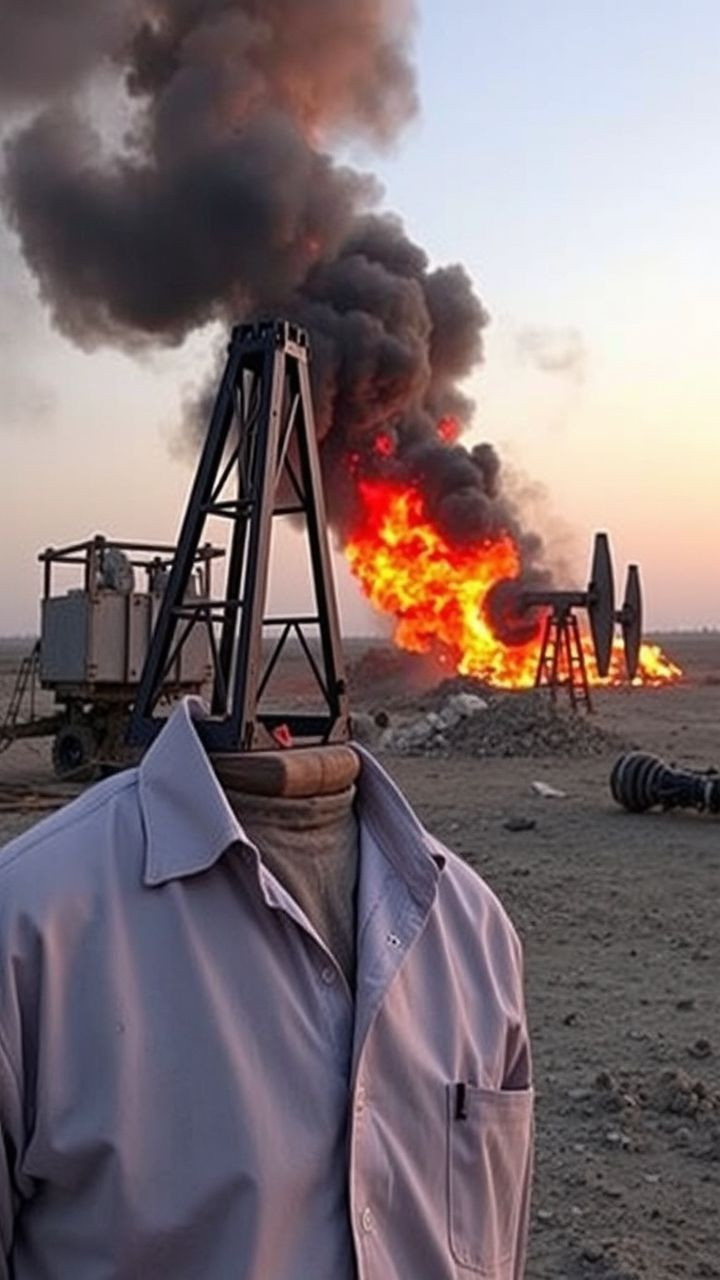
Middle East War Exposes Fragile Oil and Gas Dependency Time for Europe to Transition to Renewable Energy
The ongoing war in the Middle East has once again highlighted Europe's precarious dependence on imported oil and gas. As the conflict continues to rage, energy prices are soaring, and the continent is forced to confront its continued reliance on fossil fuels. This crisis serves as a wake-up call for Europe to accelerate its transition to renewable energy and reduce its dependence on imported fuels.
A Familiar Pattern Emerges
The current energy crisis is reminiscent of the 2022 Russian invasion of Ukraine, which triggered a massive energy crisis in Europe. At that time, Europe was heavily dependent on imported gas from Russia, leading to skyrocketing prices and a significant impact on the economy. Today, Europe is importing large volumes of liquid natural gas (LNG) from Qatar, one of the countries caught up in the current conflict. This situation is all too familiar, and it's essential to learn from past experiences.
A Call to Action
Experts warn that Europe's continued reliance on oil and gas imports puts its energy security at risk. Ana Maria Jaller-Makarewicz, an analyst for the Institute for Energy Economics and Financial Analysis (IEEFA), notes that Europe is facing the biggest wake-up call since the invasion in Ukraine. We haven't really learned the lessons that we should have learned from that experience, she says. When you look at the dependency rate of Europe on oil and gas – it hasn't really gone down.
The Need for Transition to Renewable Energy
Despite countries pledging to reduce their burning of fossil fuels, Europe remains dependent on them for more than two-thirds of its energy consumption. The International Energy Agency reports that fossil fuels produced just 29 percent of the European Union's electricity last year, with the majority coming from coal and natural gas. The research group Ember notes that only electricity generation has clearly decarbonized in recent years. It's clear that Europe must accelerate its transition to renewable energy to reduce its reliance on imported fossil fuels.
Renewable Energy The Obvious Pathway to Energy Security
United Nations climate chief Simon Stiell warns that the global transition to renewable energy is still too slow. Renewables are now the obvious pathway to energy security and sovereignty, he says. The European think tank Bruegel agrees, stating that the deployment of clean, domestically produced energy sources should be accelerated. Only by reducing structural dependence on oil and LNG imports can Europe durably shield its economy from recurrent external shocks.
Conclusion
The Middle East war has exposed Europe's fragile oil and gas dependency, but it also presents an opportunity for the continent to accelerate its transition to renewable energy. As climate leaders, we must seize this moment to drive the low-carbon transition forward and reduce our reliance on imported fossil fuels. The future of energy security and sovereignty depends on it.
Keywords Renewable energy, oil dependency, gas dependency, energy security, climate change, low-carbon transition

Popular Tools
Recent Posts