.png)
 English

English Pinoys edge in AI world
English Pinoys edge in AI world
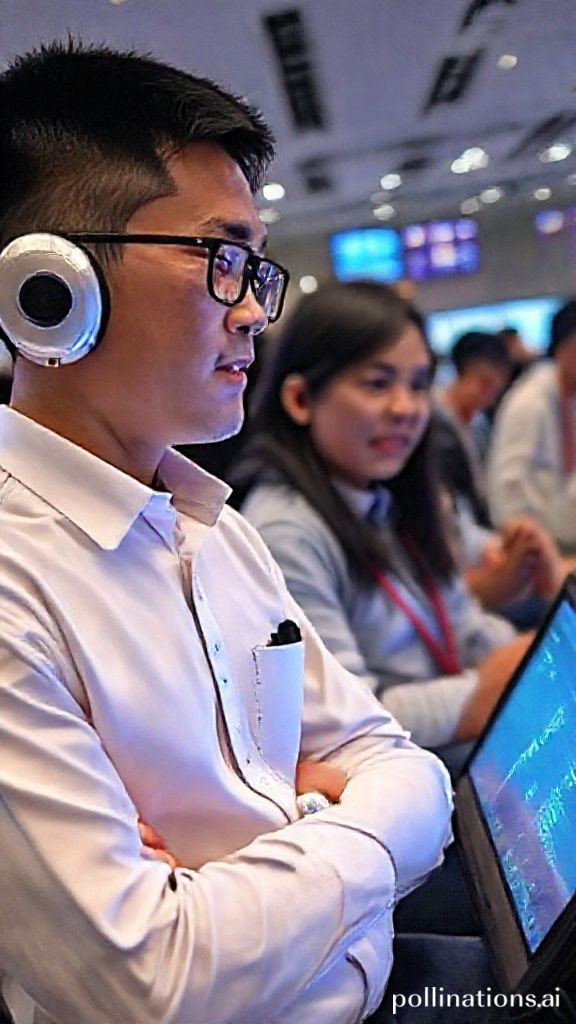
Why English Pinoys' Edge in the AI World
As the Philippines accelerates its transformation into Southeast Asia's next artificial intelligence (AI) powerhouse, a crucial question emerges Can technology alone secure the country's place in the global economy, or does the human element – particularly English proficiency – remain the nation's most vital asset?
The Rise of AI and Its Human-English Connection
This year, the Philippine government approved its National Artificial Intelligence Strategy, outlining an ambitious plan to make the nation a regional hub for AI innovation. From AI-powered logistics and financial services to digital education, the country's public and private sectors are embracing automation and intelligent technologies at remarkable speed.
The Importance of English Proficiency in AI-Driven Technologies
Many of the world's most advanced AI systems – from coding assistants to customer engagement platforms – are designed primarily for English-speaking users. Therefore, English proficiency is not just a historical advantage for the Philippines; it is a future-proof skill that determines how successfully the country can harness AI to drive economic growth and social mobility.
The Shift to Skills-First Recruitment
Across industries and continents, a major shift is underway from degree-based hiring to skills-first recruitment. Global employers are rethinking what truly matters in the workforce. Instead of asking Where did you study?, they are asking What can you do? In the Philippines, this trend is gaining traction in key sectors such as IT-BPO, manufacturing, and hospitality.
The Role of Reliable Measurement Tools
Reliable measurement tools play a crucial role in this transition. The Toeic (Test of English for International Communication), developed by ETS, is one such benchmark widely recognized by employers in the Philippines and across Asia. It helps organizations identify job-ready English skills while empowering jobseekers to showcase their abilities with confidence.
The Emergence of AI-Powered Assessment
The newly introduced Toeic Link, launched earlier this year, takes that a step further by offering an AI-powered, modular, and fast assessment that provides immediate, role-relevant insights. Together, these tools support a skills-first hiring model that is inclusive, data-driven, and aligned with the realities of a digital economy.
The Unreplaceable Human Element
AI can analyze data, automate workflows, and even simulate conversation, but it cannot replace the uniquely human capacity for empathy, persuasion, and cultural awareness. AI can draft an email, but it cannot read the room. It can summarize a meeting, but it cannot build trust or repair relationships.
The Significance of English Proficiency in AI-Driven Workforce
In essence, English proficiency is no longer just about speaking correctly; it is about thinking critically and connecting authentically in a globalized, tech-enabled world. As AI reshapes job descriptions, reskilling programs must not only teach digital literacy but also reinforce language proficiency.
Conclusion The Bridge Between Technology and Human Connection
The story of AI is not one of machines replacing people, but of people learning to work with machines. The Philippines stands at a unique crossroads armed with an English-proficient workforce, a government committed to digital transformation, and a culture of adaptability that the world deeply values. To stay ahead, continued investment in English education, assessment, and upskilling is essential.
Keywords AI, English proficiency, skills-first recruitment, Toeic, ETS