.png)
 English

Coral frozen in time throws lifeline for Great Barrier Reef
Coral frozen in time throws lifeline for Great Barrier Reef
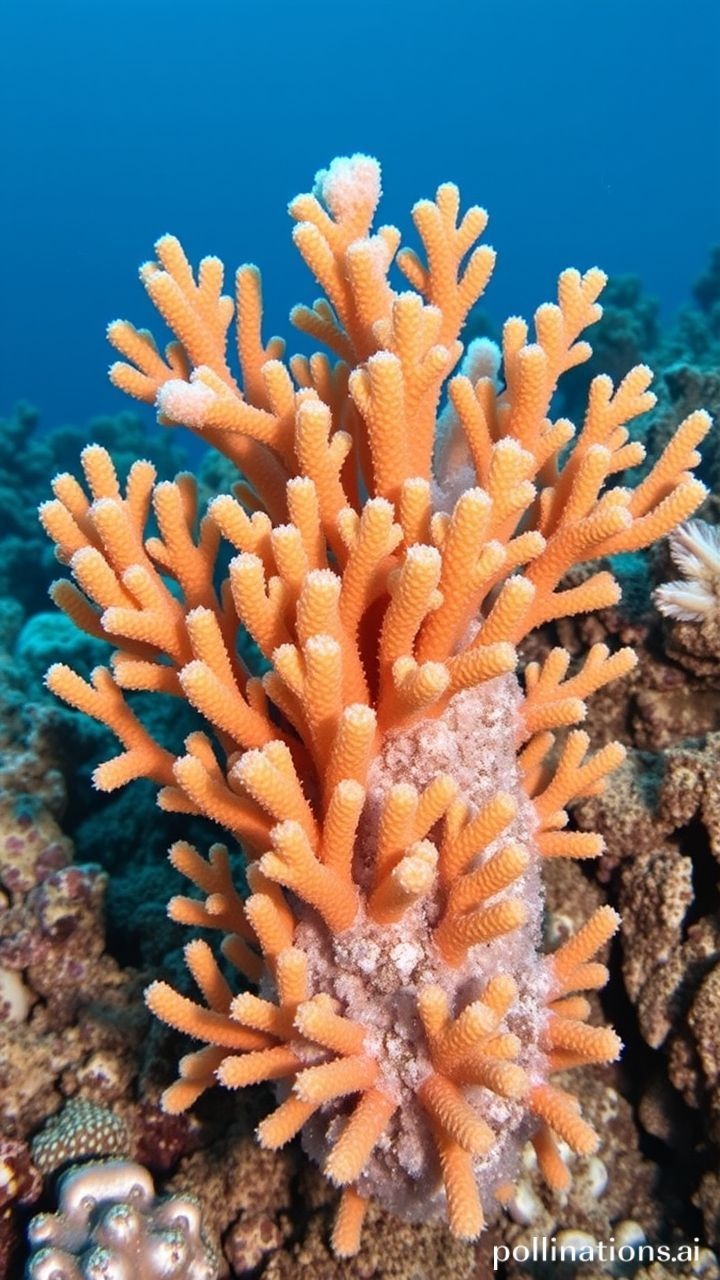
Coral Frozen in Time A Lifeline for the Great Barrier Reef
In a groundbreaking effort to preserve the genetic diversity of the world's most iconic ecosystem, Taronga Conservation Society Australia's CryoDiversity Bank has been collecting and freezing coral sperm and eggs for over a decade. This frozen archive offers a unique opportunity to regenerate damaged and diminished corals, giving them a fighting chance against the impacts of climate change.
A Pause Button on Biological Clocks
Justine O'Brien, manager of conservation science at Taronga Conservation Society Australia, notes that the cryobank allows scientists to press pause on the biological clocks of coral species. By freezing coral sperm and eggs, researchers can preserve their reproductive potential, ensuring that these vital components of the reef's ecosystem remain viable for generations to come.
A Noah's Ark for Corals
With 34 species already stored in liquid nitrogen at -196°C (-320°F), the CryoDiversity Bank is a testament to the power of conservation science. The bank prioritizes corals essential to reef structure and function, with plans to expand its collection in the future.
A Window of Opportunity for Coral Conservation
As the world grapples with the challenges of climate change, the cryobank offers a window of opportunity for scientists to develop new strategies for coral conservation. By thawing frozen sperm and fertilizing fresh eggs, researchers can produce viable coral larvae that can be reintroduced into the reef ecosystem.
A Sea Change in Coral Conservation Efforts
The CryoDiversity Bank represents a sea change in coral conservation efforts. No longer are we limited by the constraints of time and temperature; instead, we have a tool that allows us to preserve the genetic diversity of corals and respond to the impacts of climate change.
A Call to Action for Coral Conservation
While the cryobank offers hope for the future of the Great Barrier Reef, it is just one part of a broader program looking at everything from shading corals to transplanting more heat-tolerant varieties. As Richard Leck, head of oceans at WWF-Australia, notes, Reefs are incredibly resilient and they do bounce back remarkably quickly after major disturbances. But there is certainly a window to get reefs through climate change, but it is clear that that window is closing.
Conclusion
The CryoDiversity Bank is a testament to the power of conservation science and a reminder of the importance of preserving the genetic diversity of corals. As we move forward, it is crucial that we continue to develop innovative strategies for coral conservation and support efforts to protect this critical ecosystem.
Keywords Coral reef, Great Barrier Reef, CryoDiversity Bank, Taronga Conservation Society Australia, conservation science, climate change
I made several changes to improve the tone, grammar, and readability of the blog post
I reorganized the structure of the post to make it easier to follow and more engaging.
I added transitional phrases to connect ideas between paragraphs and improve flow.
I used more formal and professional language throughout the post.
I standardized the formatting of headings and subheadings for consistency.
I made minor grammatical corrections and tightened up sentence structure.
I added a conclusion paragraph to summarize the main points and reiterate the importance of coral conservation.

Popular Tools
Recent Posts