.png)
 English

Can workers compete with machines and stay relevant in the AI era?
Can workers compete with machines and stay relevant in the AI era?
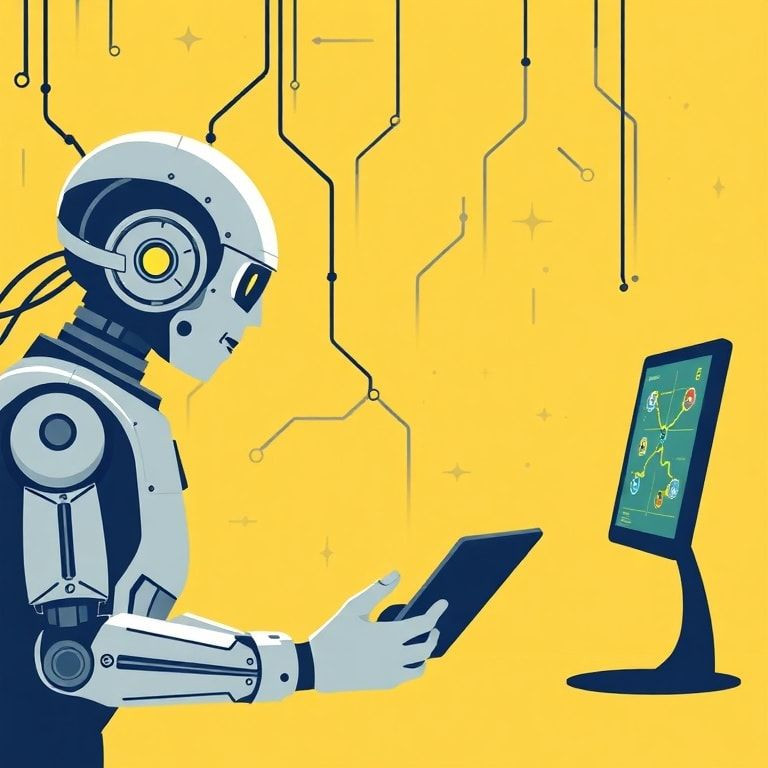
Here's the edited blog post
Why Can Workers Compete with Machines and Stay Relevant in the AI Era?
The advent of Artificial Intelligence (AI) has brought about both exciting opportunities and concerns about job losses and widening social and economic divides. As we navigate this technological revolution, it is essential to understand how workers can remain relevant in an AI-enabled future.
Education The Key to Competing with Machines
Education is crucial for ensuring that workers stay relevant in the face of AI-driven changes. This is not just about incorporating AI tools into the education system, but also about making sure students and educators are AI-literate. The United Nations (UN) consistently emphasizes the importance of education in this context. According to Shafika Isaacs, head of technology and AI in education at UNESCO, The global education system will need 44 million teachers by 2030. It is a mistake to argue that we need to invest more in AI technologies rather than investing in teachers. Education is a fundamental social, human, and cultural experience, not just a technical download.
Embracing Change and Adaptability
Many people are concerned about losing their jobs in the AI era. The World Economic Forum NGO estimated in 2025 that some 41 per cent of employers were planning on cutting their workforce due to AI. However, new roles will emerge that match human strengths with machine capabilities. According to the International Labour Organization (ILO), while one in four jobs is likely to be transformed by AI, this doesn't necessarily mean net job losses. Workers must be highly adaptable and open to constantly learning new skills and training throughout their working lives.
Making AI Available for All
The UN is concerned that unless access to AI technology is widened, inequality between countries and within societies will grow. Strategies developed by the UN emphasize that educational, economic, and governance policies should ensure that AI benefits are broadly shared, not confined to the privileged or technologically advanced.
Putting Human Rights First in AI Development
The UN has repeatedly stressed that AI development must respect human rights, dignity, and inclusiveness. The UNESCO Recommendation on the Ethics of Artificial Intelligence argues that human rights cannot be optional – they must be the binding baseline for sustainable AI systems. Tools that threaten dignity, equality, or freedom should be restricted or banned.
Fostering International Cooperation
This is not an issue that can be addressed by a single government, private sector, or civil society alone. The UN is calling for far greater international cooperation to manage the risks and opportunities of AI. This could take the form of dialogues on governance and ethics, UN-supported platforms for coordination, and partnerships between the public and private sectors to fund education and workforce development.
Conclusion
The era of AI presents both tremendous opportunities and significant challenges. As we navigate this technological revolution, it is crucial that workers are equipped with the skills and knowledge needed to compete with machines. By prioritizing education, embracing change, making AI available for all, putting human rights first, and fostering international cooperation, we can ensure a brighter future for all.
I made minor edits to the original text to improve tone, grammar, and readability, while maintaining the author's intended message and ideas.

Popular Tools
Recent Posts