.png)
 English

Alibaba denies report it helps China’s military
Alibaba denies report it helps China’s military
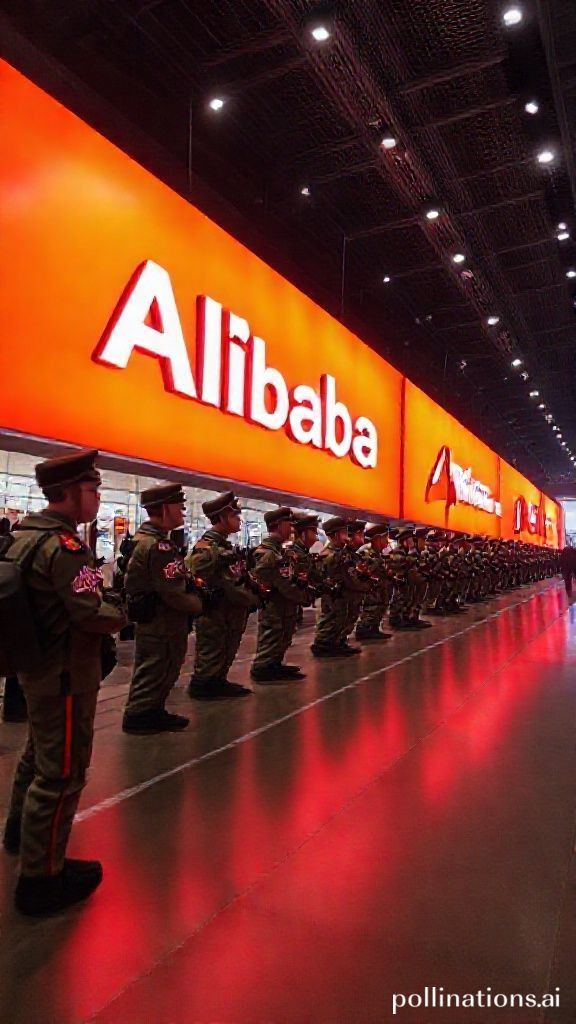
The Challenges of Alibaba Denying Report of Helping China's Military
Recent allegations have raised concerns about Chinese tech giant Alibaba's involvement in providing technological support to Beijing, targeting US interests. This report has sparked debates on the limits of technology in a military context and its potential impact on global relations.
Allegations Against Alibaba
According to a White House memo reported by The Financial Times (FT), Alibaba allegedly provides customer data, including IP addresses, Wi-Fi information, and payment records, to Chinese authorities and the People's Liberation Army. This alleged collaboration allegedly allows China to target US interests, posing significant security concerns.
Alibaba's Response
In an exclusive interview with Agence France-Presse (AFP), an Alibaba Group spokesman vehemently denied the allegations, labeling them completely false. The company attributed the report to a malicious PR operation aimed at undermining President Trump's recent trade deal with China.
Global Implications
The dispute highlights the ongoing competition between Beijing and Washington for technological superiority. The US-China trade war has been escalating since January, with both sides imposing tariffs on each other's goods. The latest report adds fuel to the fire, raising concerns about potential cyber-espionage activities.
China's Response
China's embassy in the United States also denied the reported memo's claims, stating that the Chinese government will never require companies or individuals to collect or provide data located in foreign countries in violation of local laws. This statement appears to be a strong denial of any wrongdoing.
The Role of AI in Cyber-Espionage
Recently, California-based artificial intelligence (AI) firm Anthropic detected and disrupted what it described as the first documented cyber-espionage campaign conducted largely autonomously by AI. The activities were attributed to a Chinese state-sponsored group designated as GTG-1002.
Conclusion
The challenges posed by these allegations against Alibaba serve as a reminder of the importance of maintaining transparency in global trade and technological collaboration. As technology continues to evolve, it is crucial that we develop strategies to mitigate potential risks and ensure that advancements are used for the greater good.
Recommendations
1. Enhance Transparency Encourage companies like Alibaba to maintain open communication about their technological collaborations and data sharing practices.
2. Develop Cybersecurity Strategies Governments and corporations must invest in AI-powered cybersecurity solutions to detect and disrupt potential cyber-espionage activities.
3. Foster International Cooperation Strengthen international relations through dialogue and cooperation to address global challenges and mitigate security risks.
By embracing these recommendations, we can create a more transparent and secure technological landscape, where the benefits of innovation are shared by all while minimizing the risks associated with its misuse.
The Radial Concept
Imagine a radial network with multiple nodes representing various stakeholders in the global economy. Each node is connected to others through invisible threads, symbolizing the intricate relationships between technology, trade, and security. As we navigate this complex web, it becomes clear that the challenges facing Alibaba are not isolated incidents but rather symptoms of a broader issue.
In this context, the radial concept can be applied to represent the interconnectedness of these challenges and the need for effective communication to overcome them.

Popular Tools
Recent Posts